
Truck Cap Fitment Guide: How to Find the Right Cap for Your Truck
In this guide
Finding the right truck cap starts with proper fitment.
A truck canopy may look like it should fit your pickup, but small differences in bed length, bed-rail shape, tailgate design and truck generation can make two seemingly similar caps completely incompatible.
Whether you call it a truck cap, truck canopy, truck topper, camper shell, pickup cap, or truck bed canopy, the safest approach is to match the cap to your truck's exact specifications.
This guide explains what information you need before buying a truck cap and why proper fitment matters.
What Information Do You Need for Truck Cap Fitment?
Before shopping for a truck canopy, confirm these five details:
-
Year
-
Make
-
Model
-
Truck generation
-
Bed length
You should also know whether your truck has any special bed features or factory accessories.
For example:
2024 Toyota Tacoma Double Cab with 5-foot bed
is far more useful than simply saying:
Toyota Tacoma
The more accurate your vehicle information is, the easier it is to confirm the correct canopy.
Why Truck Generation Matters
Truck manufacturers frequently redesign their pickups.
A new generation may change:
-
Bed dimensions
-
Bed-rail profile
-
Tailgate shape
-
Cab-to-bed spacing
-
Rear corner shape
-
Mounting points
-
Electrical connections
This means a cap from the previous generation may not fit even when the advertised bed length is the same.
For example, two generations of a pickup may both be sold with a nominal 5-foot bed while having completely different canopy mounting surfaces.
When checking truck cap compatibility, always consider the truck generation in addition to the model year.
How Do You Determine Your Truck Bed Length?
Truck bed length is normally measured along the inside of the bed from the front bulkhead to the inside of the closed tailgate.
Common pickup-bed sizes include:
-
Approximately 5 ft
-
5.5 ft
-
6 ft
-
6.5 ft
-
8 ft
However, those are usually marketing descriptions rather than exact physical measurements.
A manufacturer's “5-foot bed” might measure slightly more or less than exactly 60 inches.
For that reason, use your truck's official bed specification whenever possible rather than choosing a truck cap based only on your own measurement.
Can the Same Truck Model Have Different Bed Sizes?
Yes.
Many pickups are offered with multiple combinations of:
-
Cab size
-
Bed length
-
Trim
-
Wheelbase
For example, the same truck model may be offered with both a short bed and a standard bed.
Those configurations require different truck caps.
A canopy designed for a 5.5-foot bed will not properly fit a 6.5-foot bed even if both trucks are the same year and model.
Why Bed-Rail Shape Matters
Truck caps sit on or attach to the bed rails.
The shape of those rails affects how the canopy:
-
Sits on the truck
-
Seals against the bed
-
Mounts securely
-
Aligns with the tailgate
New truck generations sometimes change the bed-rail shape without dramatically changing the overall bed dimensions.
This is one reason simply measuring the bed length is not enough to guarantee fitment.
Cab Style Can Affect Truck Cap Fitment
Cab configuration can sometimes affect truck-cap compatibility indirectly because manufacturers pair certain cabs with specific bed lengths or wheelbases.
Common cab descriptions include:
-
Regular Cab
-
Extended Cab
-
Double Cab
-
Crew Cab
-
SuperCrew
-
CrewMax
The most important factor remains the pickup bed itself, but identifying the correct cab configuration can help verify that the vehicle information is accurate.
Does the Truck Trim Level Matter?
Sometimes.
Most trim levels do not completely change the truck bed, but certain special editions or factory packages may include equipment that affects installation.
Examples can include:
-
Bed utility rails
-
Factory tonneau systems
-
Bed storage compartments
-
Sports bars
-
Bed extenders
-
Factory tie-down tracks
-
Special bed liners
If your truck has unusual factory equipment, mention it when confirming fitment.
Will a Truck Cap From Another Model Fit?
Usually, you should assume no unless the manufacturer specifically confirms cross-compatibility.
Even if two trucks appear to have similar bed dimensions, differences in:
-
Width
-
Rail profile
-
Cab angle
-
Tailgate
-
Bed corners
can prevent a proper fit.
A truck topper should be selected using an approved vehicle application rather than visual similarity.
Will an Older Truck Cap Fit a Newer Truck?
Sometimes—but only if the truck manufacturer carried over the same bed design.
A new model year does not automatically mean the bed changed.
Likewise, the same generation may continue for many years with identical canopy fitment.
The important question is therefore not:
Is the truck cap from the same year?
It is:
Was the pickup bed design the same for both vehicles?
This is why truck caps are often listed using year ranges rather than individual years.
Example of Truck Cap Fitment
Imagine a canopy is listed for:
Ford F-150 — 2015–2020 — 5.5 ft Bed
That does not automatically mean it fits:
2021 F-150 — 5.5 ft Bed
The bed length may be similar, but the newer truck generation could have different dimensions or mounting geometry.
Always confirm the complete fitment.
How to Measure Your Truck Before Ordering
Even when you know the official bed size, a few measurements can help confirm that you have identified the correct configuration.
Useful measurements include:
Bed Length
Front inside wall to closed tailgate.
Bed Width
Measure across the bed near the rails.
Rail Width
Check the width from outer edge to outer edge.
Cab Height
Useful when checking how closely the canopy roof will align with the truck cab.
Measurements should be used as a verification tool, not a replacement for the manufacturer's application guide.
What About Drop-In Bed Liners?
A drop-in bed liner can sometimes interfere with the mounting surface of a truck cap.
If the liner extends over the top of the bed rails, the installer may need to:
-
Modify the liner
-
Remove sections
-
Use different mounting hardware
A spray-in bed liner normally creates fewer fitment issues because it follows the original bed shape.
Always mention your bed-liner type before installation.
Can You Keep a Tonneau Cover With a Truck Cap?
Usually not with a conventional full-size truck cap.
Most tonneau covers and truck canopies use the same bed-rail area.
However, some specialized systems are designed to work together.
If you currently have a tonneau cover, assume it will need to be removed unless the truck-cap manufacturer confirms compatibility.
Factory Utility Rails and Track Systems
Many modern pickups include bed-mounted utility tracks.
Depending on the truck and canopy, these rails may:
-
Remain installed
-
Be used as part of the mounting system
-
Require special brackets
-
Need modification
This is especially common with pickups designed around modular bed accessories.
The correct truck-cap installation kit should account for the vehicle's factory bed system.
Tailgate Fitment Matters Too
A correctly fitted truck canopy must work properly with the pickup's tailgate.
Check that:
-
The tailgate opens freely
-
The canopy rear door closes properly
-
Seals make appropriate contact
-
Handles do not interfere
-
Cameras or sensors remain functional where applicable
Tailgate geometry is another reason truck caps should be vehicle-specific.
How Much Clearance Should There Be Between the Cap and Cab?
A truck canopy normally needs a small amount of clearance from the cab.
The exact amount varies by design.
The truck bed can move slightly relative to the cab as the vehicle travels over uneven surfaces.
A canopy installed too close to the cab could potentially make contact.
Follow the manufacturer-approved installation position rather than trying to eliminate the visual gap.
Used Truck Cap Fitment
Fitment becomes especially important when buying a used truck cap.
Before purchasing, get the original application information.
Ideally you should know:
Original truck year
Original truck model
Original bed length
Then verify that the same canopy application is approved for your truck.
Do not buy a used truck topper simply because:
“It came off another 6-foot truck.”
Two 6-foot beds from different manufacturers can have completely different dimensions.
How to Read a Truck Cap Fitment Listing
A good fitment listing should look something like:
Toyota Tacoma | 2024–2026 | 5 ft Bed
or:
Ford F-150 | 2015–2020 | 6.5 ft Bed
The important parts are:
Manufacturer → Model → Generation/year range → Bed size
If any of those details are missing, confirm them before ordering.
Truck Cap Fitment Checklist
Before purchasing your truck canopy, verify:
|
Fitment Detail |
Check |
|
Vehicle year |
☐ |
|
Manufacturer |
☐ |
|
Model |
☐ |
|
Truck generation |
☐ |
|
Bed length |
☐ |
|
Cab configuration |
☐ |
|
Factory bed rails |
☐ |
|
Bed liner type |
☐ |
|
Existing tonneau hardware |
☐ |
|
Tailgate configuration |
☐ |
|
Special factory accessories |
☐ |
|
Cap application confirmed |
☐ |
What Happens If a Truck Cap Doesn't Fit Properly?
An incorrect truck-cap fitment can cause more than an unattractive gap.
Potential problems include:
-
Water intrusion
-
Poor door alignment
-
Tailgate interference
-
Uneven seals
-
Mounting problems
-
Excessive movement
-
Damage to the truck or canopy
A canopy should never be forced to fit a truck it was not designed for.
Frequently Asked Questions
How do I know what truck cap fits my truck?
Identify your exact year, make, model, generation and bed length, then compare that information with the truck-cap manufacturer's approved fitment list.
Are truck caps universal?
No. Most rigid truck caps are designed for specific pickup beds.
Does bed length alone determine fitment?
No. Width, rail shape, tailgate design and truck generation also matter.
Can a 6-foot truck cap fit any 6-foot bed?
No. Different truck manufacturers use different bed dimensions and shapes.
Can a truck cap fit multiple model years?
Yes. If the pickup uses the same bed design across several model years, one canopy may fit the entire year range.
Can I use measurements to confirm fitment?
Yes, measurements are helpful for verification, but the manufacturer's fitment application should be the primary reference.
Does a bed liner affect truck cap installation?
It can. Over-the-rail drop-in liners may interfere with mounting, while spray-in liners generally create fewer issues.
Correct Fitment Comes First
Before comparing aluminum truck caps, fiberglass truck toppers, MOLLE panels, sliding windows, rooftop tent capacity, or accessories, make sure the canopy actually fits your pickup.
The most important information is:
Year + Make + Model + Generation + Bed Length
From there, account for special bed features, factory rails and existing accessories.
A properly fitted truck cap or truck canopy will align better, seal more effectively, operate more smoothly and provide a stronger foundation for years of work, camping and everyday use.
Find the Right GullWing Cap for Your Truck
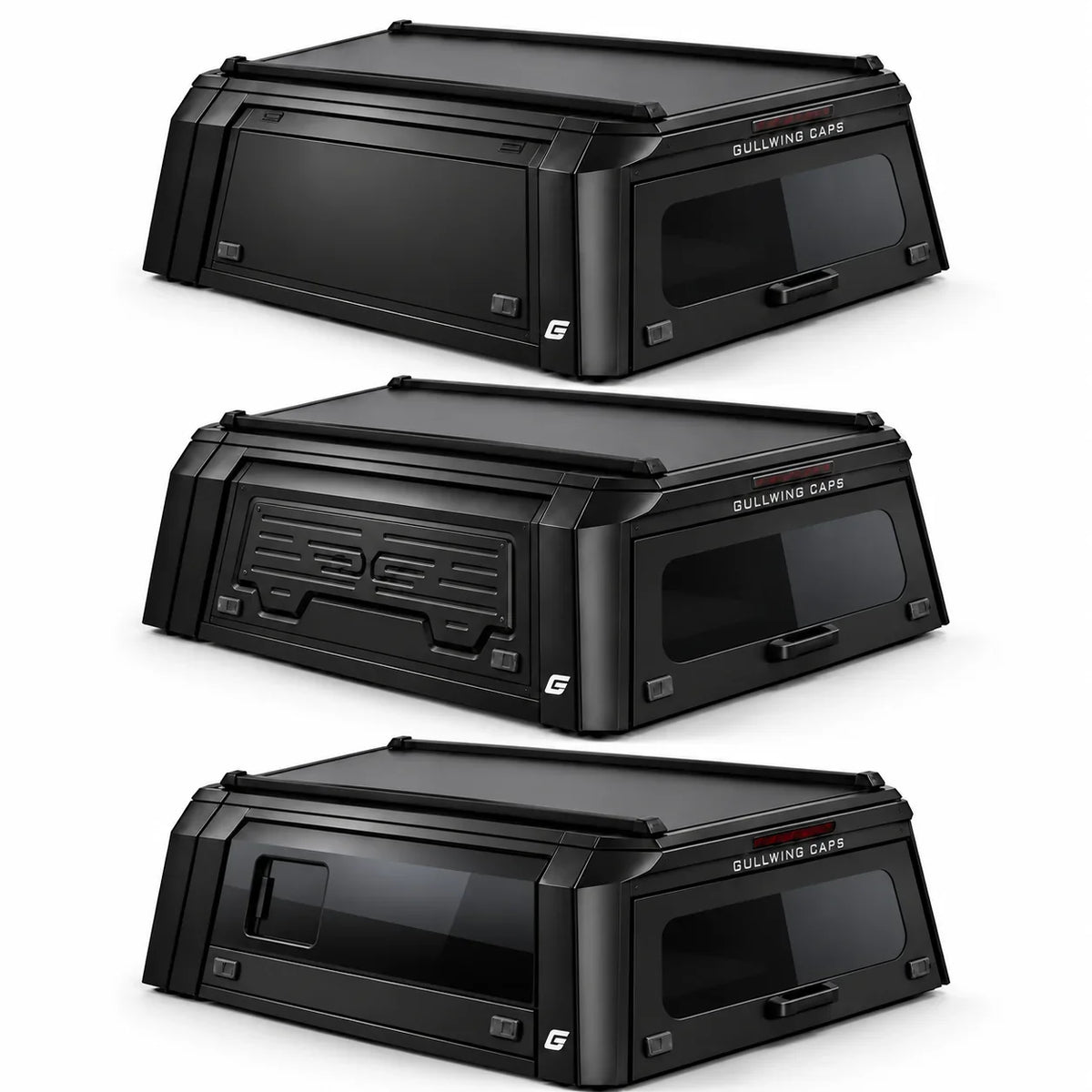
GullWing aluminum truck caps are available for select midsize and full-size pickups in multiple bed lengths and configurations, including MOLLE Panel, Smooth Side and Sliding Window designs.
FAQ
Are truck caps universal?
No. Most rigid truck caps are designed for specific vehicle generations and bed dimensions.
Will any 6-foot truck cap fit a 6-foot truck bed?
No. Bed width, rail shape, tailgate geometry and actual bed dimensions vary between manufacturers and generations.
Can a truck cap fit multiple model years?
Yes, when the pickup uses the same bed design across those model years.
Does a truck's trim level affect truck cap fitment?
Sometimes. Special factory packages, utility rails, bed storage or other equipment can affect installation.
Can I determine fitment by measuring the truck bed?
Measurements are useful for verification, but they should not replace an approved vehicle fitment guide.
Keep exploring.
More buying advice, installation help and care guides.